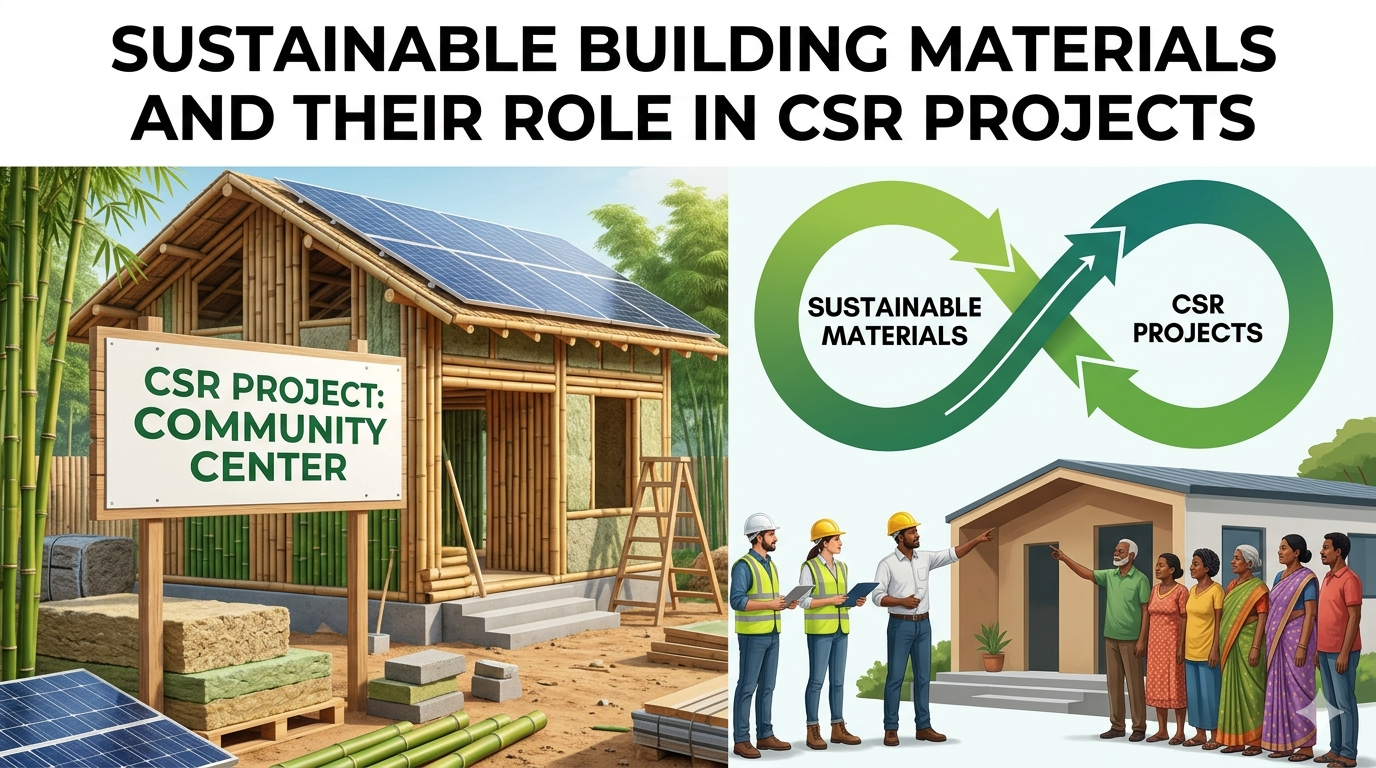
Corporate Social Responsibility (CSR) is no longer just about philanthropy—it also includes the way organizations design and construct their facilities. Sustainable building materials are key to CSR projects because they reduce environmental impact, create healthier spaces, and demonstrate a tangible commitment to both people and the planet.
Why Sustainable Materials Matter in CSR Projects
The materials used in construction affect energy consumption, waste generation, and long-term operational costs. Choosing sustainable options is not only environmentally responsible—it also benefits the community and the organization in multiple ways:
- Reduced Carbon Footprint: Materials sourced responsibly, like recycled steel or sustainably harvested wood, help lower greenhouse gas emissions.
- Healthier Environments: Non-toxic materials improve indoor air quality, creating safer spaces for employees, students, or residents.
- Economic Sustainability: Durable, long-lasting materials reduce maintenance costs and minimize waste over time.
- Positive Brand Image: Using sustainable materials demonstrates a company’s commitment to social responsibility, which is increasingly valued by clients, stakeholders, and the community.
These practices reflect the principles of eco-friendly architects, who focus on sustainable, environmentally conscious design in both private and community projects.
Common Sustainable Building Materials
Here are some widely used eco-friendly materials often employed in CSR initiatives:
- Recycled and Reclaimed Wood – Ideal for furniture, flooring, or paneling, reducing deforestation while providing natural warmth.
- Bamboo – A fast-growing, renewable option for flooring, wall panels, or decorative features.
- Recycled Metal and Aluminum – Reduces mining and energy consumption while offering durability.
- Low-VOC Paints and Finishes – Non-toxic coatings improve air quality and reduce harmful emissions.
- Cork and Natural Fibers – Biodegradable options for flooring, wall coverings, and furniture.
- Energy-Efficient Glass – Double-glazed or low-emissivity glass helps lower heating and cooling energy requirements.
- Rammed Earth and Mud Blocks – Traditional yet sustainable construction materials that provide excellent thermal insulation.
- Recycled Plastics – Used in panels, furniture, and tiles to reduce landfill waste.
Many environmentally friendly architecture projects showcase creative use of these materials to balance sustainability, aesthetics, and functionality.
How Sustainable Materials Enhance CSR Goals
Using eco-friendly materials in CSR projects goes beyond environmental benefits. It helps organizations:
- Support Local Communities: Locally sourced materials reduce transportation emissions and boost local economies.
- Educate and Inspire: Green buildings showcase sustainability practices to employees, stakeholders, and visitors.
- Promote Social Responsibility: Sustainable construction reflects ethical practices and corporate commitment to a better future.
- Encourage Long-Term Impact: Materials that are durable, low-maintenance, and recyclable extend the life of the project, ensuring continued benefits to communities.
CSR projects that incorporate sustainable materials make a visible impact on both the environment and society, showing a company’s true dedication to responsible development.
Practical Tips for Selecting Sustainable Materials
When planning a CSR or community-focused project, consider these strategies:
- Assess Life Cycle Impact: Choose materials that have minimal environmental harm, require low energy for production, and have long lifespans.
- Prioritize Recyclable or Biodegradable Options: Reduce waste and simplify end-of-life disposal.
- Verify Certifications: Look for FSC-certified wood, LEED-compliant products, or other verified sustainability labels.
- Use Local Suppliers: Supports communities, reduces transportation emissions, and often ensures better material quality.
- Consult Experts: Work with eco friendly architects or designers experienced in sustainable construction to optimize material choices.
Even small changes—like using recycled tiles, bamboo panels, or low-VOC paints—can significantly improve the sustainability of a project while maintaining visual appeal.
Evaluating Suppliers and Material Sources
Selecting the right supplier is just as important as choosing the material itself. Consider:
- Transparency: Suppliers should provide detailed information about material sourcing and sustainability practices.
- Certifications: Look for industry-recognized eco-labels or green building certifications.
- Reputation: Review past projects and client testimonials to ensure material quality and authenticity.
- Innovation: Some suppliers offer materials with energy-saving or modular design benefits suitable for CSR initiatives.
Careful selection ensures that the sustainable materials you choose truly align with your CSR objectives.
Final Thoughts
Sustainable building materials are at the heart of effective CSR projects. From recycled wood to bamboo, cork, and energy-efficient glass, these choices reduce environmental harm, support communities, and create healthier, inspiring spaces.
By following the principles of eco-friendly architects and learning from successful environmentally friendly architecture and sustainable architecture projects in Bangalore, organizations can design CSR initiatives that are impactful, functional, and visually appealing.
Every material choice is an opportunity to demonstrate commitment to sustainability. Even small, intentional decisions can leave a lasting positive impact, proving that thoughtful design and social responsibility go hand in hand.
Sustainability in CSR projects is not just a choice—it’s a long-term investment in the environment, community, and organizational reputation.